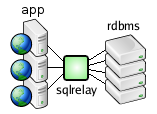
Thursday, April 6, 2017

Oracle TLS/SSL Encryption Tutorials

So, you want to secure communications between your application and an Oracle database with TLS/SSL...

Most TLS/SSL-capable servers are secured by generating a private key, getting a certificate, and adding a few lines to a config file to tell the server the locations of the cert and key files. Of course, if you generate the certificate yourself, then you also have to tell the server about your fake certificate authority. But, for most apps, that's it. Three parameters in a file somewhere: cert, key, and ca.

With Oracle, the idea is similar, but the details are very different.

Rather than storing certificates and keys in files and providing the paths to them in a config file, you store them in an Oracle "wallet" and provide the path to the wallet.

While Oracle wallets are more secure than flat files, the security features introduce some interesting quirks that are worth reviewing before attempting an implementation.

When you're ready to take the plunge, tutorials follow:

Friday, February 24, 2017

SQL Relay 1.0.1 Release Announcement

Version 1.0.1 of SQL Relay, the powerful connection pool, load balancer, query router, and database proxy, is now available.

This release features lots of small improvements, mainly for issues discovered during attempts to make it compliant with Redhat's packaging guidelines, and for a set of issues reported by users.


Thread Fix

This is fairly important.

There was a long-standing bug in the sqlr-listener process that caused multiple threads to access the same variable, without coordination. The symptom was that the sqlr-listener process might crash, randomly, every few days. The variable was a buffer used to build log/notification messages, so the error could only occur if logging or notifications were configured, but it could happen if there were logger or notifications tags in the config file, even if the modules themselves were disabled. The workaround was to comment out the entire logger and notification tag groups, or to configure the sqlr-listener to be multi-process instead of multi-thread (using sessionhandler="process").

None of that is necessary now though. The bug is fixed. Local variables are used to build the messages in the parts of the sqlr-listener that can be run by multiple threads.

sqlrsh Fixes

You can now hit ctrl-D to abort sqlrsh without generating a segfault. Also, errors are now printed to stderr and if an error occurs (in non-interactive mode) then sqlrsh exits with status 1 instead of 0.

ODBC Bug

1.0.0 featured an ODBC fix which itself created a new bug. Between the two, the first line of the result set could be duplicated or skipped. Both bugs should be fixed now.

PDO on 32-bit Systems

The PHP PDO driver compiles correctly for PHP 7 on 32-bit systems now.

Ruby Updates

Ruby semi-recently consolidated Fixnum and Bignum classes into the Integer class. The Ruby API has been updated to support this change.

Router Sequence Fix

There was a bug that made it necessary to start all of the instances that a router instance would route to prior to starting the router itself. Eg. if you had 2 instances: routermaster and routerslave, and a third instance: router, then routermaster and routerslave had to be started prior to router. This wouldn't always happen if the instances were configured to start at boot though. Now, they can be started in any order.

Normalize Translation

Fixed a bug in the "normalize" query translation that caused it to remove spaces before unary ! and - when they followed a keyword. For example, it will now return "select !a,!b from mytable" instead of "select!a,!b from mytable".

Upates to the Drop-in Replacement Libraries

As recommended by rpmlint, the .so links aren't installed for these libraries any more. Now, the major version must be included in the LD_PRELOAD command. Eg: LD_PRELOAD=/usr/local/firstworks/lib/libmysql51sqlrelay.so.4

The Drop-in Replacement Library for MySQL now pays attention to the SQLR_MYSQL_MAP_DATE_TO_DATETIME environment variable. If it's set to "yes" then DATE types are mapped to DATETIME. This is useful if you're mapping a MySQL app to an Oracle database, have NLS_DATE_FORMAT set to include the time, and your app truncates the time if the type of the column is DATE instead of DATETIME.

configure Script Options

The --disable-wall and --disable-werror options have been added to the configure script to work around quirks on systems who's header files generate warnings or particular errors.

The --with-abs-max-connections option has been added to set the absolute maximum number of connections that can be configured at compile time. It defaults to 4096, up from 512 in previous releases.

The --with-fortify option has been added to enable -O -D_FORTIFY_SOURCE=2 -fstack-protector-strong compiler options.

The --enable-oracle-at-runtime (and similar options for sap, db2, and informix) have been added to enable runtime loading of the database libraries rather than linking them in at compile time.

Error Messages

Various error messages have been improved to suggest solutions.

Erlang Reference

An API reference exists for the Erlang API now.

Cache Manager

The mysterious sqlr-cachemanager process isn't enabled by default any more. This process manages the client-side result set cache, only needs to be run on SQL Relay clients, and only if an app caches result sets. As such, it is installed when building from source, but isn't enabled by default. Also, in the RPM distribution it has been split out into its own RPM. The docs have also been updated to explain when to run the process.

"run", "log", and "cache" directories and file names

This is more of an internal change, but...

In the past there were various directories under .../var/sqlrelay/tmp that contained files used at runtime by the various instances of SQL Relay. These have been consolidated into .../var/run/sqlrelay. The "log" directory has been changed from .../var/sqlrelay/log to .../var/log/sqlrelay. The "cache" directory has been changed from .../var/sqlrelay/cache to .../var/cache/sqlrelay. These changes were motivated by Redhat packaging guidelines, but I think they have roots in the Linux Standard Base.

Sockets created by the sqlr-listener process to communicate with the sqlr-connection processes now have .sock extensions, and 700 permissions rather than erroneous 711 permissions). Files used by ftok() to get IPC ids now have .ipc extensions. "Up-down" files used to indicate whether the database is up now have .up extensions. The sockseq file is no longer used. Instead, the file names of sockets used to resume suspended sessions are based on the process id of the sqlr-connection process.

Full Changelog follows:

  • updated sqlr-bench to create "db"-bench.png
  • added edoc-generated API docs for the Erlang API
  • updated some module-load error verbage
  • added initial support for loading Oracle, SAP/Sybase, DB2, and Informix libraries on-demand at runtime
  • overhauled spec file
  • fixed PDO driver for PHP 7 on 32-bit platforms
  • added permissions to all open() with O_CREAT calls
  • added --with-fortify configure option
  • fixed a segfault on ctrl-D in sqlrsh fixed uncoordinated access to shared debugstr among listener threads by using local instances instead
  • added ping-loop to router connection module's logIn() method to manage cases where routed-to instances are started after the router
  • moved .../var/sqlrelay/tmp/*/* to .../var/run/sqlrelay
  • added .sock extension to sockets, .ipc extension to ipc key files, .pid extension to pid files, and .up extension to files which indicate that the db is up
  • changed mode of listener-connection sockets to 700 from 711
  • moved .../var/sqlrelay/log to .../var/log/sqlrelay moved .../var/sqlrelay/cache to .../var/cache/sqlrelay
  • libmysql*sqlrelay.so and libpqsqlrelay.so are no longer installed
  • replaced sockseq-generated unix socket with pid-based unix socket
  • updated ruby api to support unification of Fixnum and Bignum classes into Integer class
  • added --with-abs-max-connections configure script parameter
  • increased default absolute max connections to 4096 (from 512)
  • updated "can't open ... file" errors to mention user/group
  • added SQLR_MYSQL_MAP_DATE_TO_DATETIME option to mysql drop-in replacement library
  • fixed normalize translation not to remove spaces before unary - and !
  • updated sqlrsh to set error code correctly and write errors to stderr
  • sqlr-cachemanager is no longer enabled at boot by default
  • fixed another subtle bug in the ODBC driver that caused the first row to be duplicated if columns were not bound
  • added --disable-wall and --disable-werror configure options

Rudiments 1.0.4 Release Announcement

Version 1.0.4 of Rudiments, the C++ class library for developing systems and applications, is now available.


This release primarily replaces the dependency on readline with a dependency on libedit. I'd used readline directly in SQL Relay for years and one day decided it would be better if it were pushed up into Rudiments as a prompt class. However, I didn't notice that readline was GPL rather than LGPL, so using rudiments with readline wasn't necessarily GPL compliant. Actually, I guess it would only not be compliant if the application it was ultimately linked into wasn't a GPL application... But, to eschew any such doubts, Rudiments now uses libedit (which has a BSD license) instead of readline.

Some other, extremely obscure, features were added too.

Full Changelog follows.

  • added support for EOT to codetree
  • added loop-avoidance to xmldomevents class
  • added alias support to codetree class
  • replaced readline with libedit
  • included implementation of history_truncate_file for versions of libedit that don't provide it
  • added --disable-wall and --disable-werror configure options

Sunday, January 22, 2017

Rudiments 1.0.3 Release Announcement

Version 1.0.3 of Rudiments, the C++ class library for developing systems and applications, is now available.


This release mainly fixes some packaging issues, and a really subtle issues in the prompt class. The file::open() method also fails with EINVAL if it is used to create a file but no permissions are given, which would otherwise cause the method to crash on systems where FORTIFY_SOURCE is used. No pressing need to update unless these issues sound familiar.

Sunday, December 25, 2016

Rudiments 1.0.2 Release Announcement

Version 1.0.2 of Rudiments, the C++ class library for developing systems and applications, is now available.


There was actually an unannounced 1.0.1 as well. 1.0.1 mainly contained fixes for OpenSSL 1.1.x. 1.0.2 just adds another SSL tweak that's required by Fedora for packaging. No pressing need to upgrade unless you're having trouble building on a platform that uses OpenSSL 1.1.x.

Saturday, December 24, 2016

Updating Your App to Support OpenSSL 1.1.0

Introduction

OpenSSL 1.1.0 introduced several API-breaking changes, and with distributions starting to use it, I found myself scrambling to get my software working. I found various docs stating that 1.1.0 changed things, but nothing that clearly stated: "if you have this now, then change it to this..." So, that's what I'll do here, and hopefully it will help you if you find your app in the same situation.

Deprecated "method" Functions

Lots of "method" functions like TLSv1_server_method() and SSLv23_client_method() and TLSv1_2_method() are deprecated in OpenSSL 1.1.0, and if you compile your software with -Werror, then that presents a problem.

All you can call now is one of:

  • TLS_method()
  • TLS_client_method()
  • TLS_server_method()

If your code allowed the user to select a SSL/TLS mode then it can't do it by calling a mode-specific function any more. It'll have to select the mode some other way that I'm not aware of. The new methods negotiate the most modern mode supported by the client and server. It's not immediately clear how to override that, or if you can. If someone knows a way, please leave a comment below.

It's easy enough to replace function calls, but if you want to support older versions, then you have to add tests for the old and new functions to your configure script and add all kinds of #ifdefs, and so forth. Actually, since various methods like these have been added over the years, you may already have such tests and #ifdefs (I did) and it won't be so bad.

Deprecated ASN1_STRING_data
unsigned char *ASN1_STRING_data(...);

has been replaced with

const unsigned char *ASN1_STRING_get0_data(...);

This is a straightforward replacement, but note the const'ness of the return value of the new function. If you're using C++ then you may have to change the type of the variable it's being assigned to (or un-const it).

Again, this is a brand new function, so, configure tests and #ifdefs.

Opaque EVP_PKEY

The EVP_PKEY struct (public key struct) is opaque now. The header files declare that an EVP_PKEY struct exists, but the definition is hidden up in the library. The error you get (with g++ at least) is fairly obtuse though, complaining about a forward declaration and an invalid use of an incomplete type. The error just means that the struct is opaque.

Fortunately there are a bunch of functions that return the various components of the struct.

I had to replace code to get the key type like:


EVP_PKEY *pubkey = X509_get_pubkey(c);
...
int t = pubkey->type;

with code like:


EVP_PKEY *pubkey = X509_get_pubkey(c);
...
int t = EVP_PKEY_base_id(pubkey);

Note that there IS an EVP_PKEY_type() function, but it does NOT return the "type" member of the struct. Ha! Not super intuitive, but the change is still straightforward.

Similarly, I had to replace code to get the key itself like:


EVP_PKEY *pubkey = X509_get_pubkey(c);
...
const unsigned char *key = pubkey->pkey.ptr;

with code like:


EVP_PKEY *pubkey = X509_get_pubkey(c);
...
const unsigned char *key = EVP_PKEY_get0(pubkey);

I'm not sure when those functions were introduced, but they appear to be available in OpenSSL 1.0.x but not in OpenSSL 0.9.x, so again, if you want to support really old versions, then you'll have to add configure tests and #ifdefs.

Opaque X509

The X509 struct is also opaque now. Like the EVP_PKEY struct, you'll have to use functions to access its members.

The one case I needed was slightly trickier though.

In the past, I was getting the signature algorithm name like:


X509 *c = SSL_get_peer_certificate(ssl);
...
char sigalg[256];
OBJ_obj2txt(pvt->_sigalg,256,c->sig_alg->algorithm,0);

But I had to change that code to:


X509 *c = SSL_get_peer_certificate(ssl);
...
char sigalg[256];
OBJ_obj2txt(pvt->_sigalg,256,OBJ_nid2obj(X509_get_signature_nid(c)),0);

Which is a little contrived. In the old code, c->sig_alg->algorithm is an "obj", and I could pass it directly into OBJ_obj2txt. In the new code, I have to get the "nid", convert it to an object, and pass that in. Ideally I'd just get the object to begin with, but there doesn't appear to be an obvious way to do that.

As a side note, the function name X509_get_signature_nid() was a little confusing at first, because it appears to return the "nid" of the signature _algorithm_ as opposed to the signature itself. But I guess the signature itself wouldn't have a "nid", so it makes sense, but it wasn't immediately intuitive to me.

Again, X509_get_signature_nid() was introduced sometime in the 1.0.x series, so you'll have to add a test for it and #ifdefs if you want to support older versions.

Conclusion

The opacity of the structs ought to help OpenSSL be more maintainable in the future. They ought to be able to change the code at will now, without breaking the API or ABI, and that's always good. I did the same kind of thing with my Rudiments library way back, and recently to SQL Relay for that exact reason. Hopefully it will work out well for both of us.

I'm not sure about the TLS_*_method() thing though. It seems like there really ought to be a way to choose a specific SSL/TLS mode. Perhaps there is though, and I just didn't see it. Somebody let me know if they figure that one out.

Wednesday, December 21, 2016

SQL Relay 1.0.0 Benchmarks

Introduction

There are a lot of reasons to use SQL Relay, but one of the most popular is just to improve throughput, usually measured in queries-per-second.

Logging in to most databases takes a noticable amount of time...
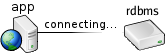
So much time, in fact, that transient apps (such as web-based applications) which start up, connect, query, disconnect, and shut down to deliver each bit of content, often take longer to log in than to run the queries. As a result, overall throughput (queries-per-second) is generally low unless many queries are run per connection.

SQL Relay maintains a pool of already-logged-in database connections, and logging in to a connection pool is substantially faster than logging into the database directly.
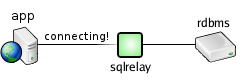
As a result, overall throughput (queries-per-second) should be maximized, and shouldn't depend nearly as much on the number of queries that are run per connection.

In theory.

Anecdotally this is the case and informal testing has always confirmed it. But, I wanted hard data and pretty graphs to prove it. Also, it had been a long time since I'd done any formal performance testing. For all I knew, I'd done something recently to make everything run horribly.


sqlr-bench

Of course there are popular tools for benchmarking apps and databases. JBench, for example. But they all use intermediate layers - JDBC, ODBC, web pages... I wanted raw comparisons: the database's native API vs. SQL Relay's native API. I also wanted it to be easy to run from the command-line, and automatable.

Months ago, I'd begun writing a program called "sqlr-bench" which aimed to run a battery of tests against the database directly, run the same tests through SQL Relay, collect stats, and produce a graph. It had to support every database that SQL Relay supported. It needed a dozen or more tunable paramters... It was a fairly ambitious project. I started and stopped work on it several times but I eventually got it working well enough.

It creates a table, populates it, and runs a series of selects. First it runs 1 select per connection, then 2 per connection, then 3, etc. It times all of this and calculates queries-per-second as a function of queries-per-connection. The whole process is done first against SQL Relay, and then directly against the database. The data is then correlated and gnuplot is used to produce a graph.

Various parameters are configurable, but the defaults are:

  • rows: 256
  • colums: 16
  • column size: 32
  • rows to fetch at once: 10
  • samples: 10
  • queries: 30

Initial Results

I ran the tests against each database, and against instances of SQL Relay running on the local machine (over a unix socket).

Theoretically I figured I should see...

  • ...against the database directly: The number of queries-per-second should increase steadily as the number of queries-per-connection increases. It should start off to be pretty bad, then get better and better, and eventually level off so that running more queries-per-connection doesn't make any more difference.
  • ...against SQL Relay: The number of queries-per-second should be independent of the number of queries-per-connection, and should be roughly the same as the maximum number of queries-per-second that can be run against the database directly.

Performance against the database directly was exactly as I expected, and it generally seemed to level off at about 20 queries-per-connection.

SQL Relay actually does have a small ramp-up period (2 or 3 queries per-connection is slower than 4 or more), which I didn't expect, but the number of queries-per-second were otherwise uncorrelated with the number of queries-per-connection, which I did.

Overall though, SQL Relay did not immediately perform as well as I expected. In fact, for most databases, there was a "break-even" between 5 and 10 queries per-connection.

While apps that use SQL Relay would still likely perform better than if run directly against the database (how many web pages run more than 5 queries that return 256 rows each), I really expected it to perform better.


Tweaks

Thus began days of profiling and analyzation. It appeared that, indeed, over the years new features had steadily introduced inefficiencies.

In most cases, things just needed to be reused instead of reallocated. Everything from database cursors to byte arrays. I replaced a few regular expressions with simple string compares, and made a few case-insensitive string compares case-sensitive. There were also some alignment and padding issues that prevented optimized strcpy/memcpy from being used. My socket buffer sizes were sub-optimal...

Lots of little changes.


Results

In the end, I was pleased with the results. Most of them, anyway.

Informix:

Oh yeah, that looks great.

MySQL:

Still looking good.

Oracle:

Not bad, but why the falloff?

DB2:

It's good where it counts, but why does DB2 eventually outperform SQL Relay?

SAP/Sybase:

Again, it's good where it counts, but throughput is generally low. And again, why the falloff?

PostgreSQL:

My goodness, PostgreSQL is fast!

I checked the code over and over to make sure my test program was legitimately running queries and not just erroring out or something. It was. Why is it so much faster than everything else? Strace showed that the socket is in non-blocking mode and that they do a poll() then read(), basically blocking manually rather than doing a blocking read. My preliminary tests with a similar strategy didn't show much improvement with that over a blocking read though. Non-blocking poll()/read() is a good way to multiplex reads through a single thread, but if you're only reading from one socket at a time, I wouldn't expect it to help at all.

Very strange.

SQLite:

Well, I guess I shouldn't really be disappointed that SQL Relay is slower than SQLite :)

FreeTDS:

82 queries-per-second??? Does SQL Server limit throughput?


What now?

The falloffs are strange. It's odd that it's so inconsistent. There doesn't appear to be a memory leak. Heap fragmentation?

Performance against DB2 and SAP is odd. It shouldn't break even so quickly.

Performance against PostgreSQL is the most strange. Whatever they're doing, SQL Relay needs to be doing it too.

And what's the deal with MS SQL Server?

These things deserve investigation.

I ran tests with SQL Relay on a server between the client and database too. The results were similar, but there was more of a ramp-up. I should publish those results too.


Test Environment

To perform these tests, I configured 2 Fedora Linux VMware VM's. One for the databases and one to run SQL Relay. Both VM's had 1 CPU. The database VM had 2Gb of RAM. The SQL Relay VM had 512MB.

The DB VM ran modern versions of all databases, in their default configurations, without any performance tweaks.

I built Rudiments and SQL Relay without debug and with -O3 optimizations like: CPPFLAGS="-O3" ./configure

The SQL Relay configurations were all pretty standard too. For example, the Oracle configuration was something like:

 <instance id="oracletest" port="9000" socket="/tmp/test.socket" dbase="oracle">
  <users>
   <user user="test" password="test"/>
  </users>
  <connections>
   <connection string="user=...;password=...;oracle_sid=..."/>
  </connections>
 </instance>

For the PostgreSQL tests I disabled typemangling.

The sqlr-bench program can be found in the test/bench directory of the SQL Relay distribution. It must be run from that directory. I ran it with default parameters. There's a benchall.sh script there too, which starts and stops the appropriate SQL Relay instances and runs sqlr-bench. I actually used that script rather than running the tests individually.